Smoochy — Summer Tastes Red
The Project & Creative Vision
Can you tell us about this shoot for @smoochy.eg? What was the brief, and what kind of visual language were you aiming for?
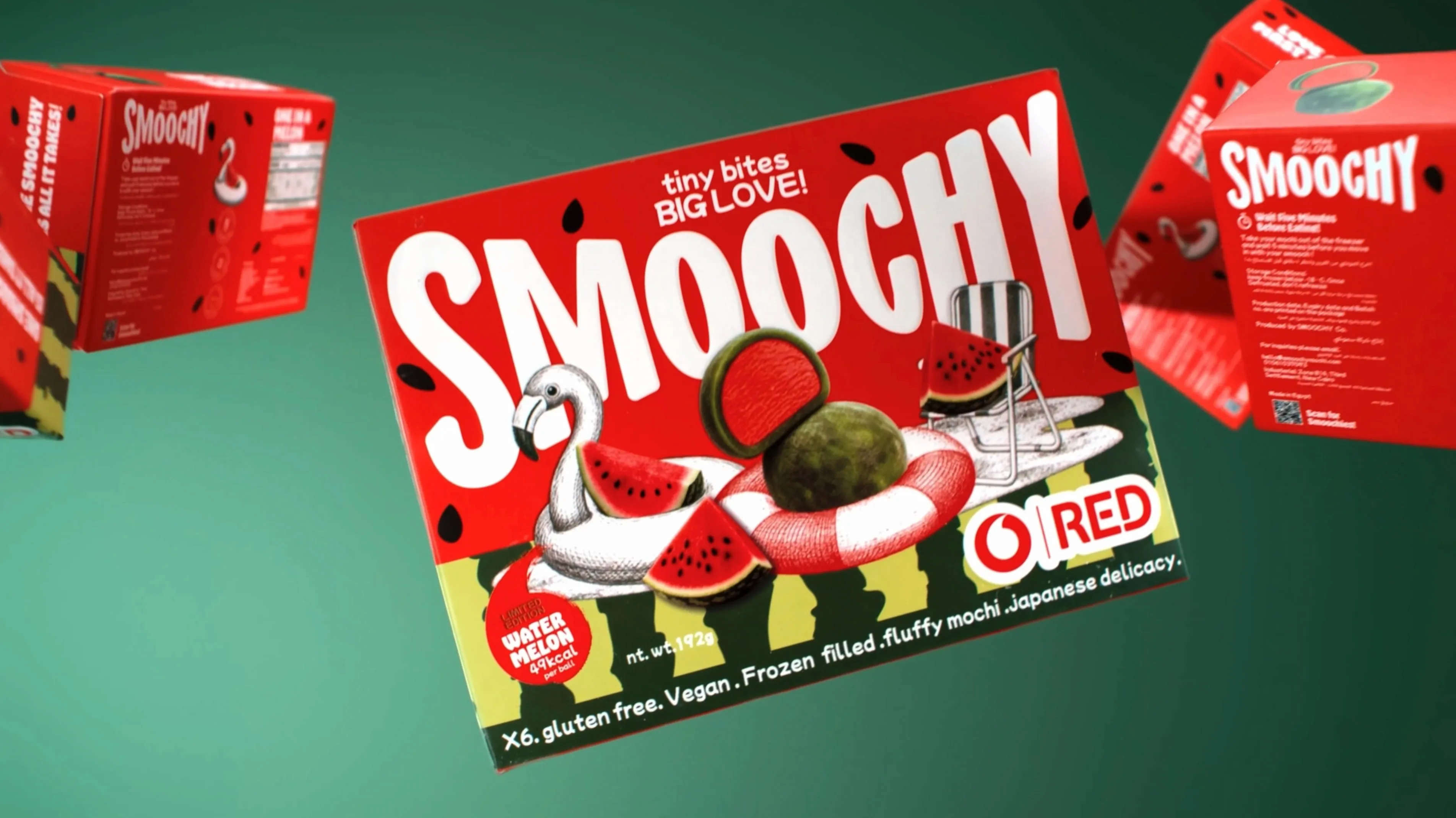
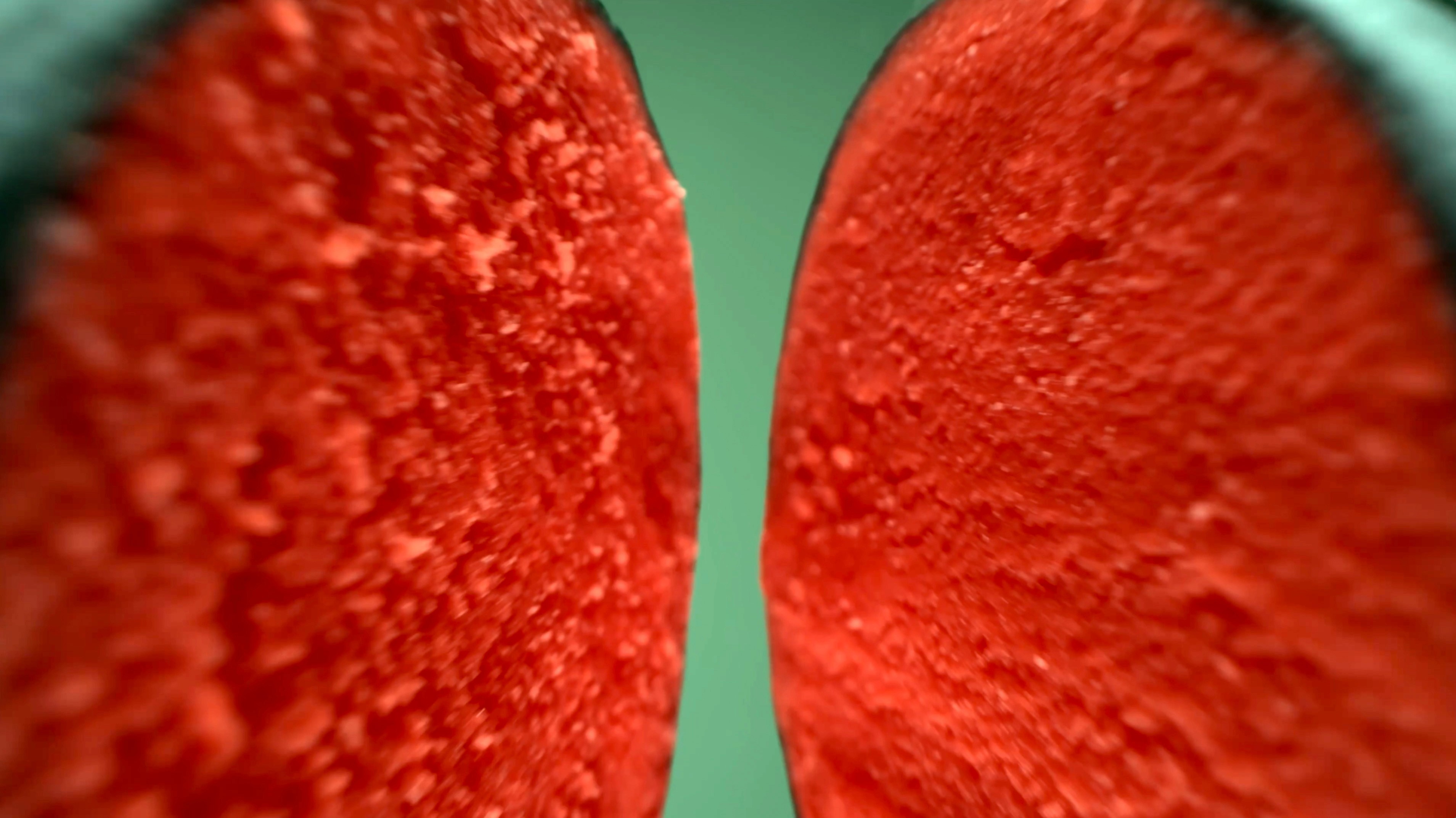
The brief from Smoochy was to launch their watermelon flavor for summer, tied into a Vodafone RED collab, with the tagline "Summer Tastes Red." The core idea was bridging two experiences: the raw, messy joy of eating a whole watermelon versus the clean, convenient bite of a Smoochy ball. We wanted the visual language to feel tactile and appetite-driven: real ice, real condensation, real fruit, shot with enough intimacy that you could almost feel the cold coming off the screen. Punchy, saturated color like reds and greens pulled straight from the packaging, but grounded in a genuine studio environment rather than anything overly stylized. The second part was to integrate all of this and deliver a dynamic, playful, and fun film.
Motion Control & Precision
Tabletop work with motion control and splash effects is incredibly demanding. How did you approach the choreography of camera and liquid movement? What role did the lenses play in making that possible?
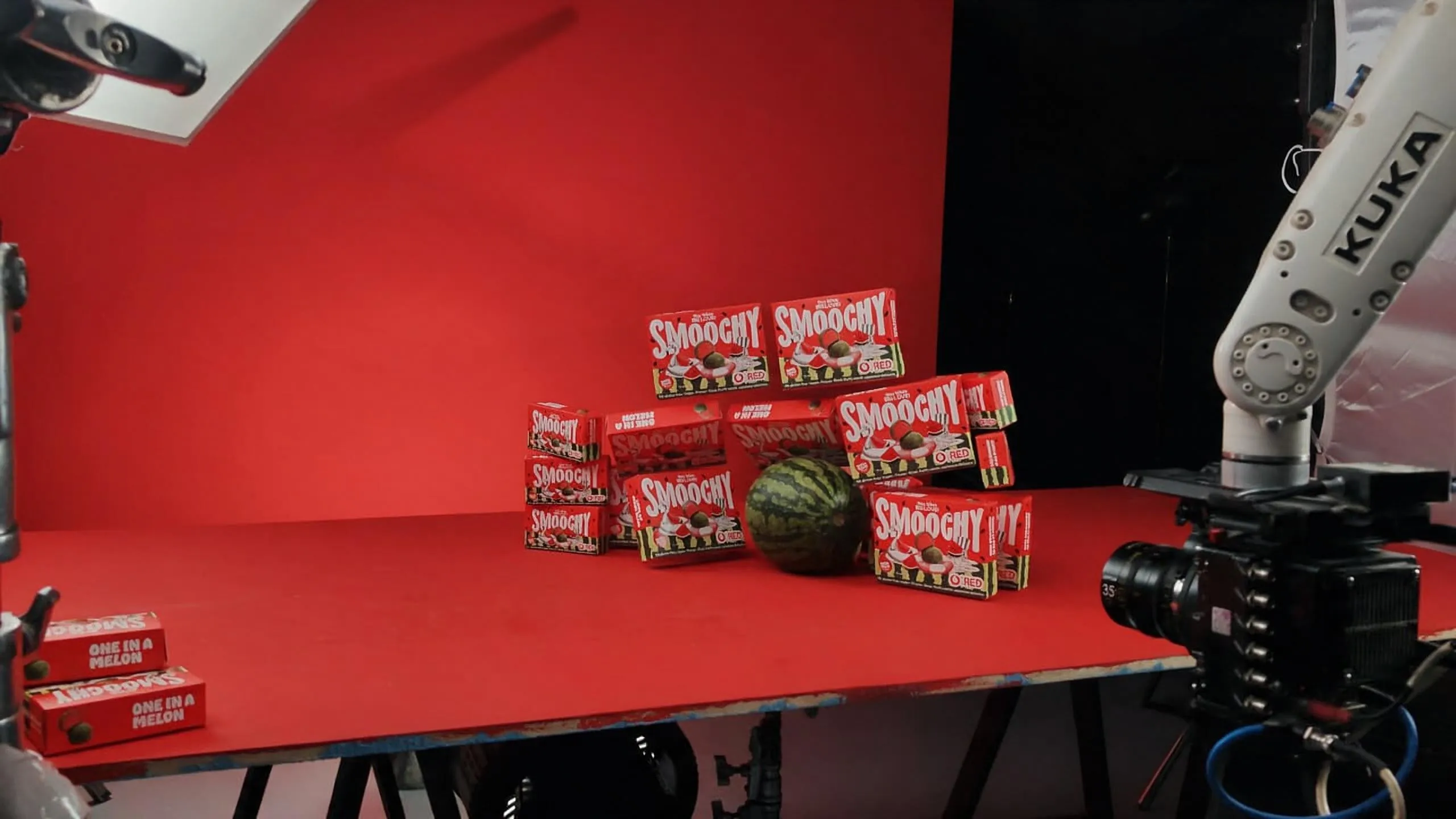
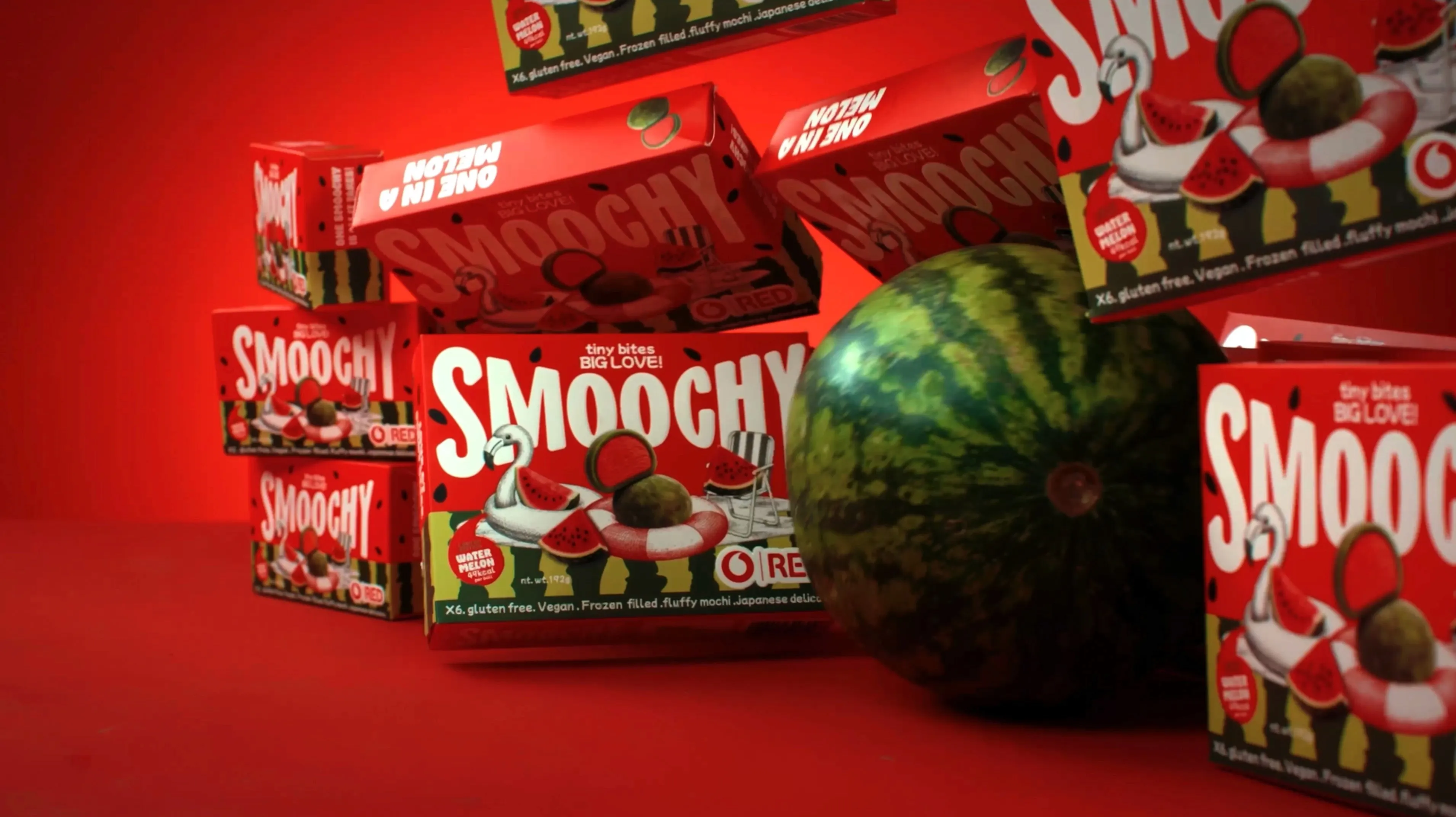
This particular shoot didn't lean on splash or liquid choreography; the core challenge here was solid-object motion control instead. Tabletop with motion control lives or dies on repeatability either way. You're often compositing multiple passes into one final plate, so the camera move has to be identical, frame for frame, across takes. We leaned on that heavily for our intro shot, where a single watermelon rolls out from a huge stack. Rather than risk collapsing the whole pile in one take, we timed and locked a precise camera move, then shot it as two separate passes, one for the rolling watermelon and one for the stack itself, and composited them together in post to get the final result.
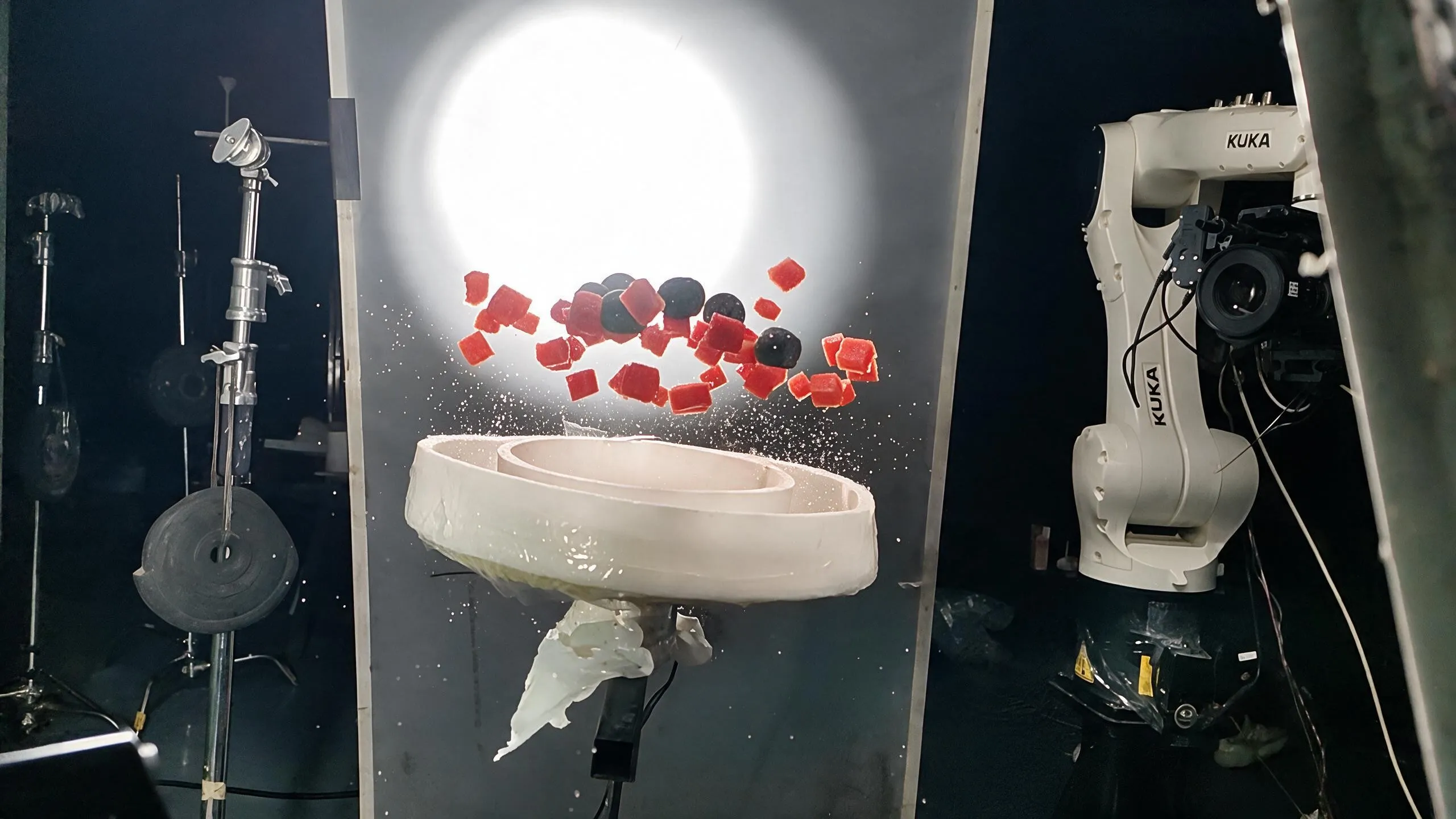
That said, when liquid is involved, the approach shifts entirely. Shooting liquids is an incredibly time-sensitive matter. Everything has to be pre-calculated, because you rarely get more than a handful of usable takes before the moment's gone. Lens choice becomes a central part of that equation, not an afterthought: your frame, your focal point, your working distance all have to be locked in advance, because everything else, the splash timing, the camera move, the composition, gets tuned to fit inside whatever frame that lens defines. There's no adjusting on the fly once the liquid is moving.
Why DZO Vespid, Gnosis, and X-tract?
You used three different lens series on this project: Vespid for core tabletop shots, Gnosis for extreme macro, and X-tract for probe-style dynamic perspectives. Could you walk us through your decision-making for each series? What specific qualities made each the right tool for its role?
The Vespid 35mm serves a specific purpose in my kit. It's the lens I reach for when the setup demands more physical distance between camera and subject than Gnosis or X-tract are built to handle at their working ranges, but I still need the frame to read wide rather than compressed. It's basically how I keep that wide-angle look even when I can't get in close.
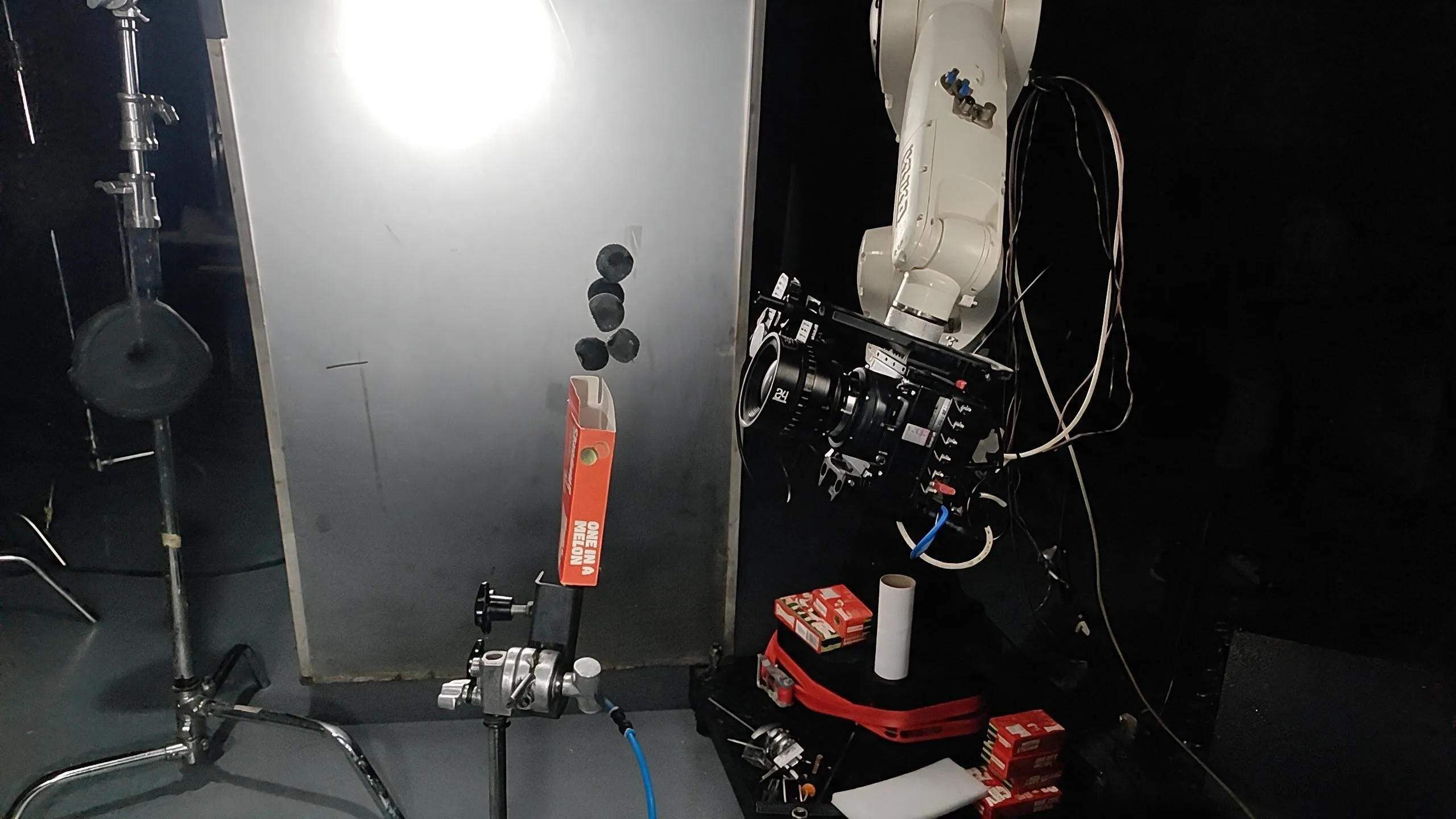
We shot the rest of the project on Gnosis, both the 24mm and the 65mm, and X-tract. I generally like to get up close and personal with whatever I'm shooting, and Gnosis gives me exactly that. X-tract picks up on the other end, letting me get the lens into spaces Gnosis simply can't reach. Between the two, I had complete control over how close and how deep into a scene I could get.
Gnosis Macro: Close-Up Storytelling
The macro shots in the final frames are stunning. How close did you get with the Gnosis lenses? Did you add any diopters or extension tubes? What kind of detail were you able to pull out that would have been impossible with a standard lens?
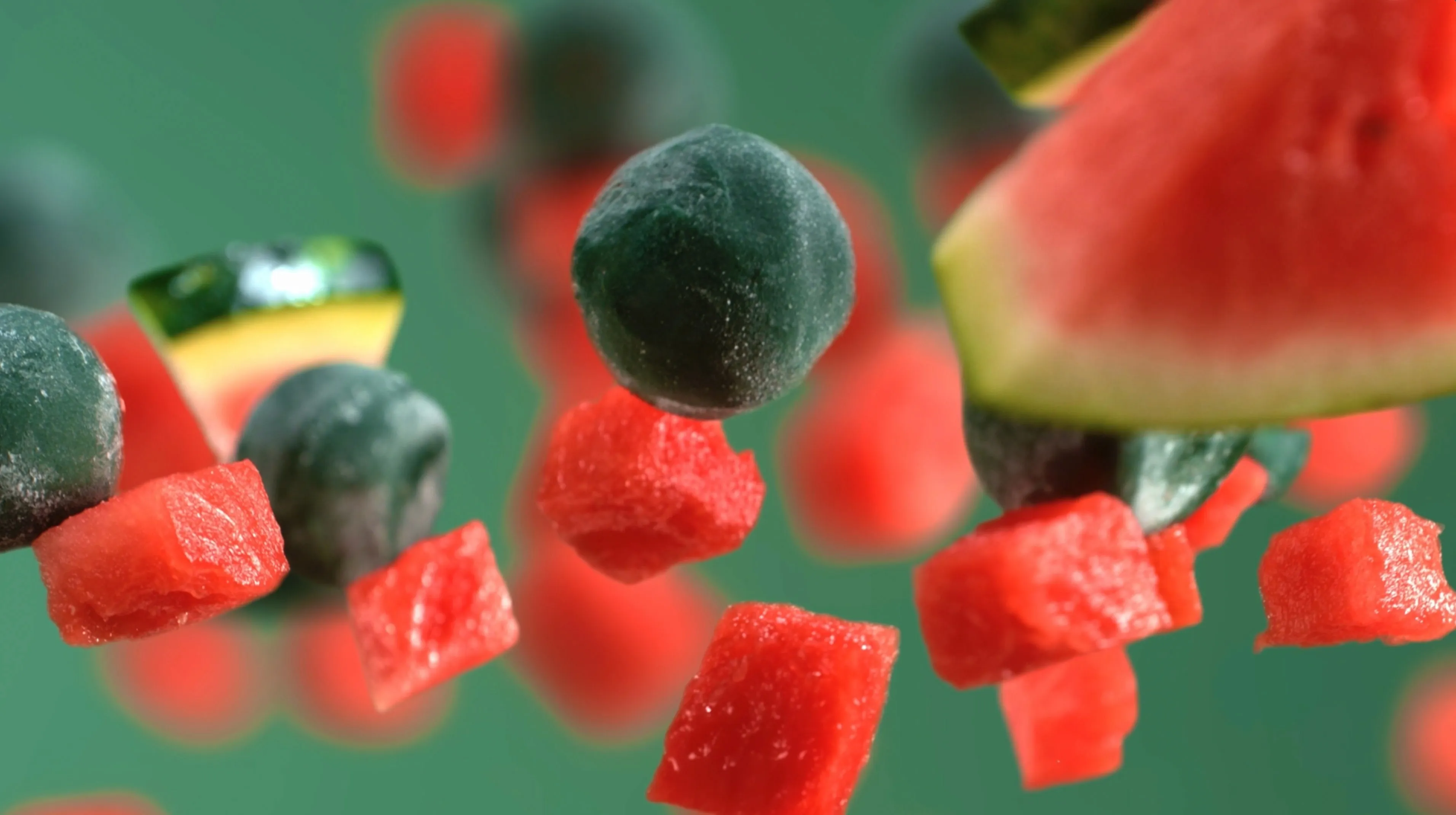
Honestly, I got as close as I wanted to. The Gnosis 24 let me push in tight on a small box, and an even smaller product, and because it's such a wide focal length, that close focus distance gave me a genuinely heroic perspective on something that small. That combination is the real trick: the close focus does the intimacy, and the 24mm focal length does the perspective, exaggerating scale in a way you just can't get from a standard lens at that distance.
With the Gnosis 65mm, I was after something different: a more compressed look, with better separation between the hero product and its background, while still staying relatively close to the subject.
X-tract: Dynamic Perspectives
The X-tract probe zoom gives you the ability to move through and around the scene in ways that no other lens can. How did that change your approach to blocking and composition, especially when combined with motion control?
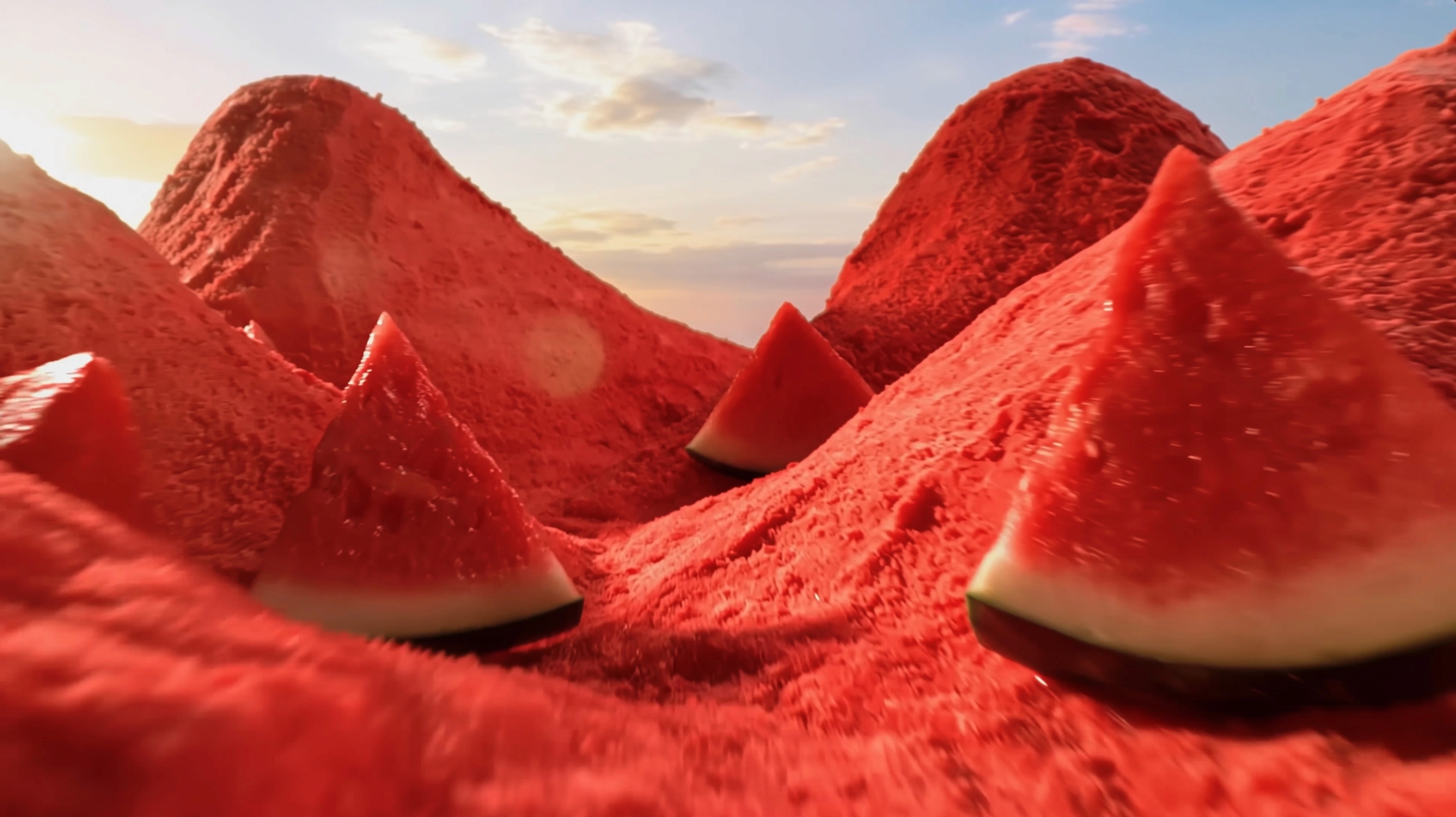
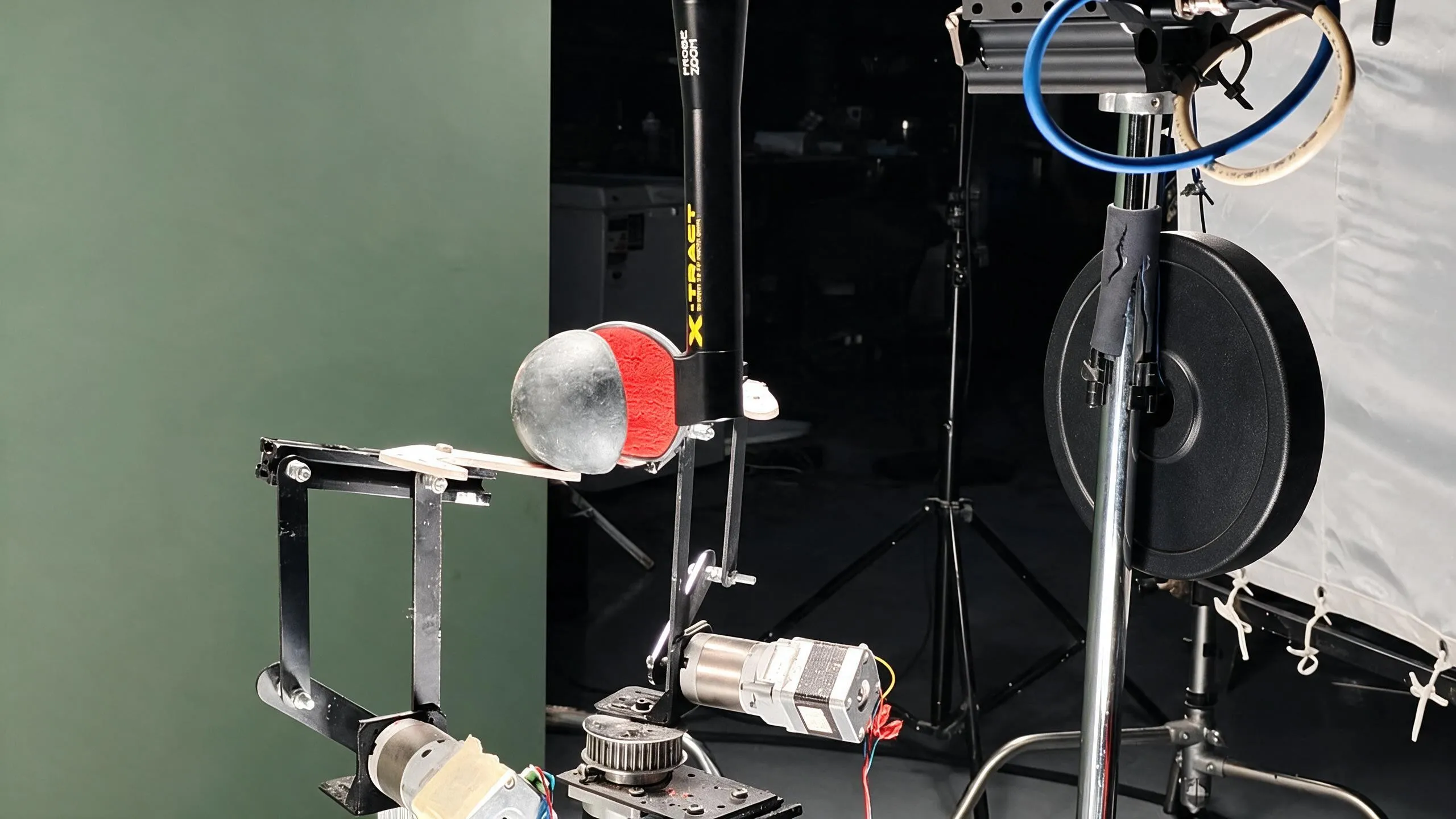
X-tract opens up a lot of creative space, starting all the way back at the brainstorming stage. It genuinely gives me a different perspective on how I'd even approach a specific shot. On this project, I wanted a rolling-hills type shot made entirely of ice cream, with watermelon slices scaled bigger than life throughout. We built a miniature model of these hills, and using motion control we mounted the X-tract on a robotic arm and flew it through the scene like a camera on a plane, weaving between the ice cream hills and taking the viewer into a different world for a few seconds.
Vespid: Core Image Quality
As the primary tabletop lens set, the Vespids had to deliver across the board: sharpness, color, contrast, consistency across focal lengths. How did they perform in a studio environment with controlled lighting and high-speed capture?
Honestly, the Vespid holds up just as well as any other lens I use. What actually makes it stand out for me isn't the image quality, it's the size. A lighter, smaller camera package just gives me more freedom on set, especially with motion control involved. Bigger lenses tend to look more impressive, but that doesn't always mean they're the better choice. Sometimes the smaller lens is genuinely the right tool for the job.
The Three-Lens Ecosystem
Shooting on three different lens series within a single project can be a challenge, matching color, feel, and consistency. How did you manage that workflow? Were there any surprises in how well (or not so well) they matched across cuts?
It's a challenge, but the more you use the lenses, the more you find your own easy fix for it. There's always a slight color shift between different lens series, but it's not a deal breaker for me. Once you understand the lenses well enough, you apply your easy fix and move on with color and grading.
Advice for Tabletop Filmmakers
For other filmmakers looking to get into high-end tabletop and motion control work, what's your biggest piece of advice? And how should they think about lens choice when building their kit?
My biggest piece of advice for someone starting out: this line of work is heavily dependent on gear, which can feel demotivating if you're just getting into it. But there are so many ways of achieving any given shot, some easier, some harder, and at the end of the day, it's the idea that makes a shot a winner, not the gear behind it. If the core idea is weak, no amount of gear will turn it into a winning shot.
On the technical side, you can always hire a professional for the parts you're not equipped for, but I personally choose to learn, even when I'm hiring a professional on set, I like to learn my own craft. The learning curve of tabletop and motion control is genuinely endless. You'll find yourself learning about things you never expected to: physics, electricity, robotics, programming, and more. This job is the real meaning of the word challenge. When it comes to building a lens kit: the more work you do that reflects your own taste, the more you develop a specific visual language that comes with its own specific needs. For me, Gnosis is my go-to series, especially the 24mm. It's much easier now to test and try lenses than it used to be, so my advice is simple: understand your visual needs first, then look for the lens that actually satisfies them.