" height="8px" id="rubXtpW1w" transform="translate(0 8)" width="24.002000457763675px"/></svg>)
Cinematographer: Daouda Diakite
Interview
Arcana 1.5X
Introduction
My name is Daouda Diakite Siama, also known as Frio Films. I’m a London based filmmaker. I shoot brand campaigns, short films, travel films and documentaries. Alongside working with brands and clients, I regularly create personal projects that allow me to experiment and explore new ideas and develop my own visual style

The Concept: What was the initial inspiration behind the The Last Cigarette story?
One of my favourite movies of all time is “The Joker” (2019) and honestly I’ve always loved the look of dark films that lean into the green and blue hues, and I’ve always wanted to use that in my own work.
short film: The Last Cigarette
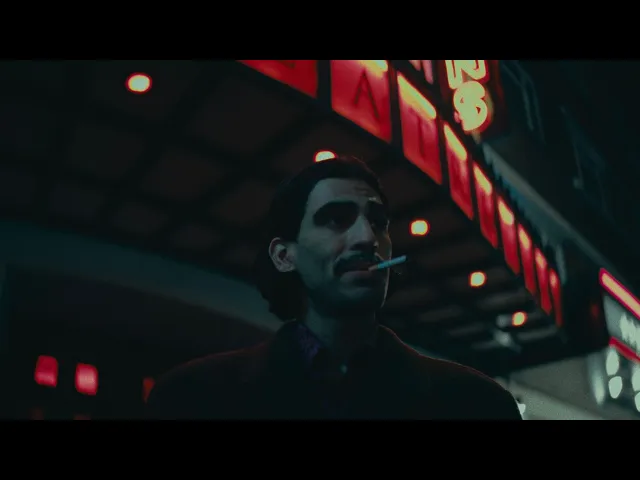
The story is a segment from a longer short film that I was working on; it’s about an actor that just came out of an audition and he didn’t get the part, and Medhi was the perfect person for this because he is really good at improvising and we wanted to experiment, so as soon as I hit record we let the camera run for 4 to 5 minutes to get extra long takes so he could really get into character and experiment with different emotions; this combination is what brought the film to life.

Choosing the Arcana: What drew you to the Arcana set specifically, and how did the 1.5x anamorphic look help shape the visual language of the film?
I’ve always been a big fan of anamorphic glass; it’s the best way to express that filmic look I’ve always desired. I’ve seen the Arcana floating around, and I did some research about the character and found out that the 2x style bokeh on a 1.5x lens was unbelievable, and in such a small package across three focal lengths made the Arcana set particularly appealing to me.

The Open Gate Workflow: How did you find pairing the Arcana with the Sony FX5's Open Gate mode?
Being able to combine Open Gate recording with anamorphic lenses was a game changer. Having that additional image real estate gives you so much more flexibility when it comes to framing and composition, especially when working with an anamorphic squeeze of 1.5x. It gives you more room to experiment with your compositions without feeling restricted; for example, when using the 45mm lens, I framed the talent far wider on the right and explored different angles, resulting in a truly captivating composition.

Lighting & Color: Can you walk us through your approach to lighting and how you achieved that specific color grade in DaVinci Resolve?
I genuinely love dark colours, so for this film I wanted to find a location with a background that stands out. You can see the bright LED’s in the background contrasting with his face, which is leaning into the greens and blues. I used one backlight for separation from the background; the rest was lighting that was already available.

The grading approach was simple: I used my power grade that I’ve developed for over a year, “Analogia”, that gave me a base layer to start with, and then I really pushed the shadows into the blues and also adjusted the temperature to get this look in DaVinci Resolve.

Challenges on Set: What was the biggest challenge during the shoot, and how did you overcome it?
One of the biggest challenges was shooting in central London. It’s such a busy environment, with people constantly moving around, so much happening in the background. Trying to capture the atmosphere we wanted while working around all the activity was definitely a challenge.

We had to be quite patient and work with our surroundings rather than against them. In a way, though it also added to the film’s atmosphere and helped make the environment feel more authentic.
Advice for Filmmakers: what advice would you give them based on your experience with the Arcanas?
My biggest advice would be not to get too caught up in the technical side of things. Anamorphic lenses are beautiful tools, but what matters most is how you use them to tell a story.

The Arcana lenses are a great way to start experimenting with anamorphic cinematography without having to invest in a huge, expensive cinema lens setup. They’re compact, versatile and give you a really distinctive look straight out of the box.

I’d encourage filmmakers to experiment, try different focal lengths, play with lighting and embrace the imperfections. Ultimately, the lens is just a tool ,it’s what you create with it that matters.