
2025.12.29
In this interview, Michael Maagaard shares his transition from mechanical engineer to filmmaker and Director of Photography. He recounts the moment that sparked his passion for visual storytelling through a viral Instagram reel. Michael discusses his recent short film, "Ættehevn" (Blood Vengeance), and how the Blackmagic PYXIS 6K and DZO Arles Prime lenses enhanced its visual narrative. He also reflects on the changing landscape of cinematic equipment, offers advice for aspiring filmmakers, and highlights emerging trends in the industry.
“Can you introduce yourself and share a pivotal moment in your film career that shaped your path?”
- My name is Michael Maagaard (Age 30), born and raised in Denmark.
I’m a pretty unusual subject when it comes to how I started my career as a filmmaker/DoP.
I was actually a mechanical engineer and blacksmith for more than 10 years.
Filmmaking has never been a part of me or my family, I one day simply started using my phone for pictures on daily walks, which at some point made me buy my first drone and later a camera.
So my career mostly started out with me being a nature photographer.
The turning point of my career would be the day I uploaded a simple reel to Instagram with one person and a burning chair in the ocean. Somehow this simple reel resonated with so many people worldwide and went viral.
From that day I started to realize that through videos I was able to touch and move people, which triggered something inside me.
I wanted to make more of this; I wanted to move people and get to them at a personal level instead of just posting random photos and videos ‘for the views’.
It became my passion to capture and tell stories through my own visuals and my atypical thoughts.
I’ve never learned anything about filmmaking, other than the basics of how to use a camera. – Which is maybe why I because have an unusual approach to making videos and stories.
I granted great success with my unusual methods of filmmaking, which has gotten me different jobs around the world. So late 2024 I quit my 9-5 Job as a mechanical engineer, to pursue my dream of becoming a full-time filmmaker and DoP.
“Can you tell us about the film you recently worked on, including the project name, and what unique themes or messages you aimed to convey?”
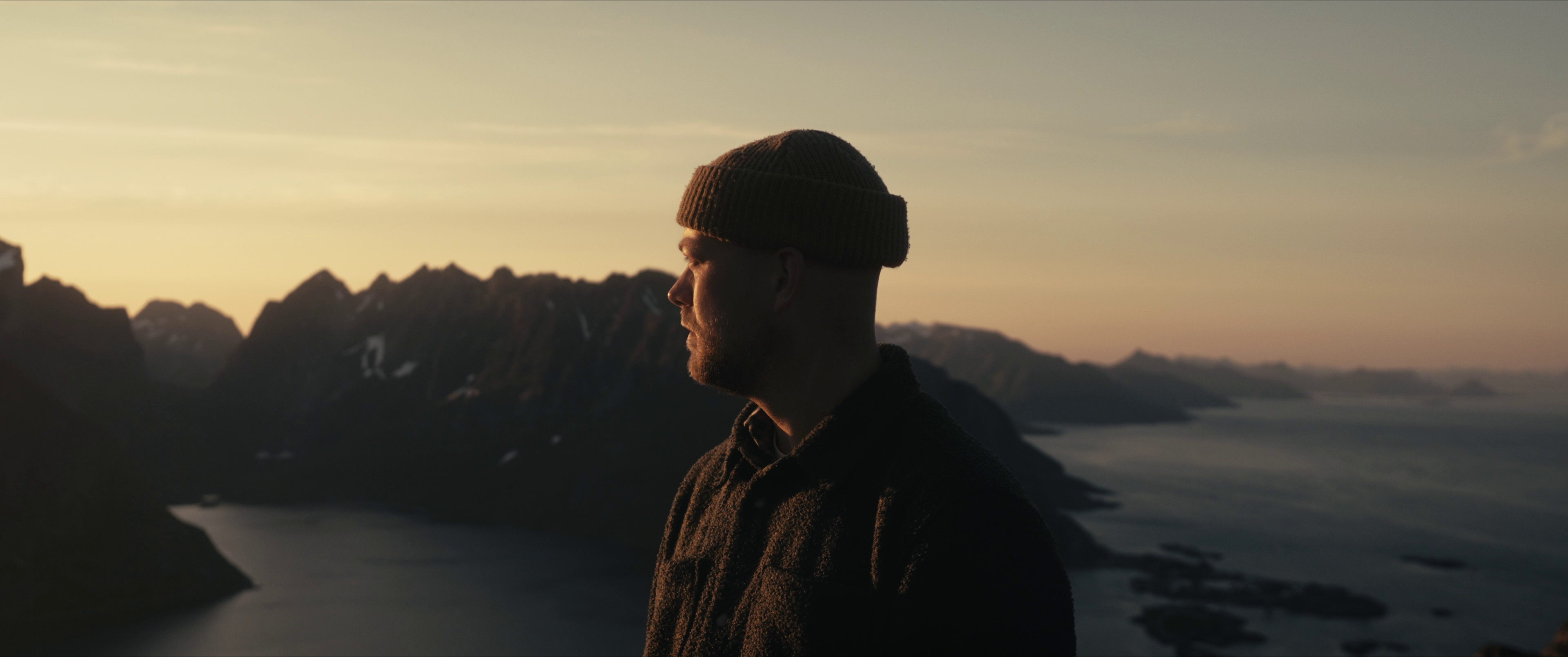
- The film we just wrapped up shooting late 2025, called Ættehevn (English title: Blood vengeance) is a Norwegian produced short film.
It is a film taking place in the Viking age in the southwestern part of Norway.
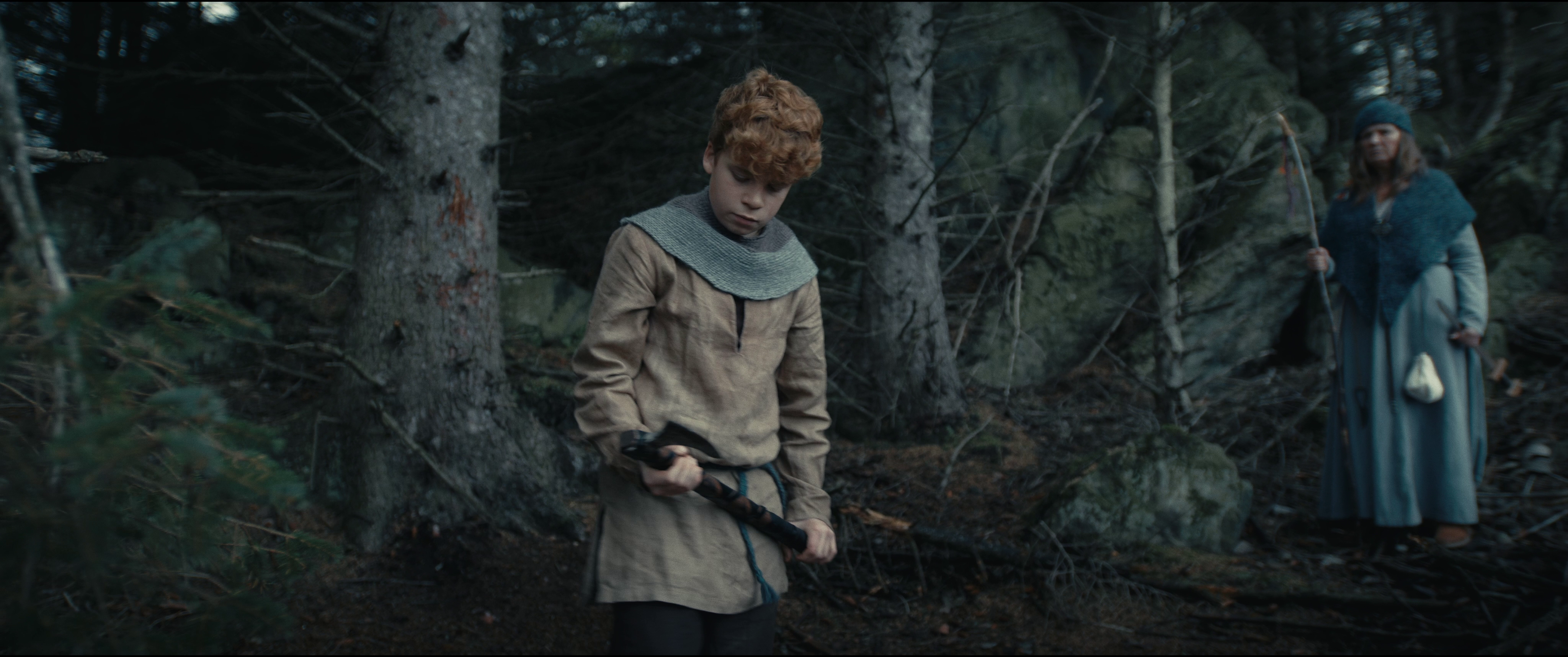
We follow in the footprint of a young buy called Eigil.
As a child Eigil is forced to watch in horror as family and friends are murdered right in front of, he’s eyes.
We then follow Eigil over many years as he had to flee the horror in his home village.
On his journey he meets mythical persons and is prepared mentally and physical for what is to come in the future, when he returns to the place where he grew up.
- I was brought in as DoP on the project and knew straight away what kind of mood and overall theme of the film.
We were a very small team behind the film, which also meant that everybody had more than one job/role.
This meant that I was put in charge if creating all visuals behind the film, only limited by my own imagination.
The director and I collaborated very good, and he had 100% trust in what I created visually.
The director was then able to concentrate on actor performance and adapting the actors to the scenes.
I wanted the visuals to match the feelings behind the film, and to match the history.
I wanted people to feel as if they were spectating the film in real life instead of just through a screen. – They should be present in the moment.
“What specific camera did you choose for your latest film, and how did the features of arles prime lenses influence your creative decisions during the shoot?”
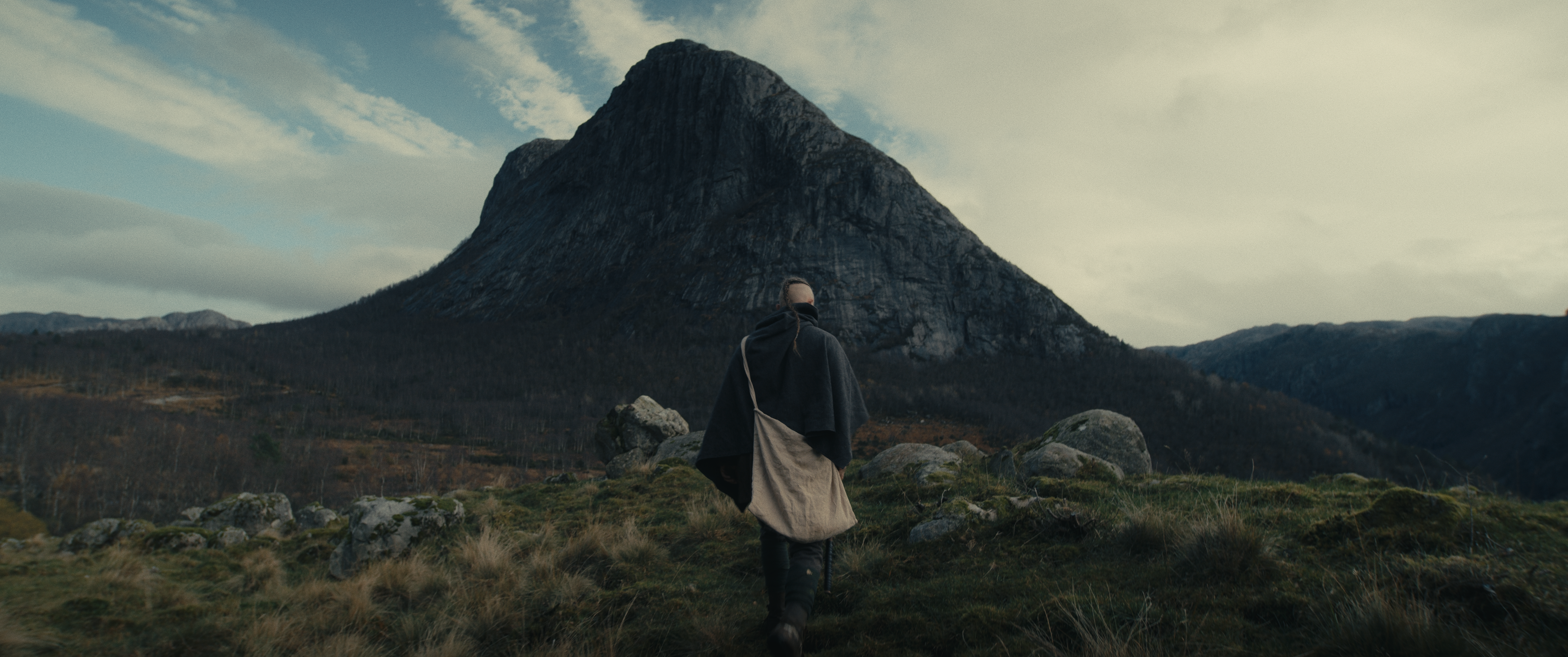
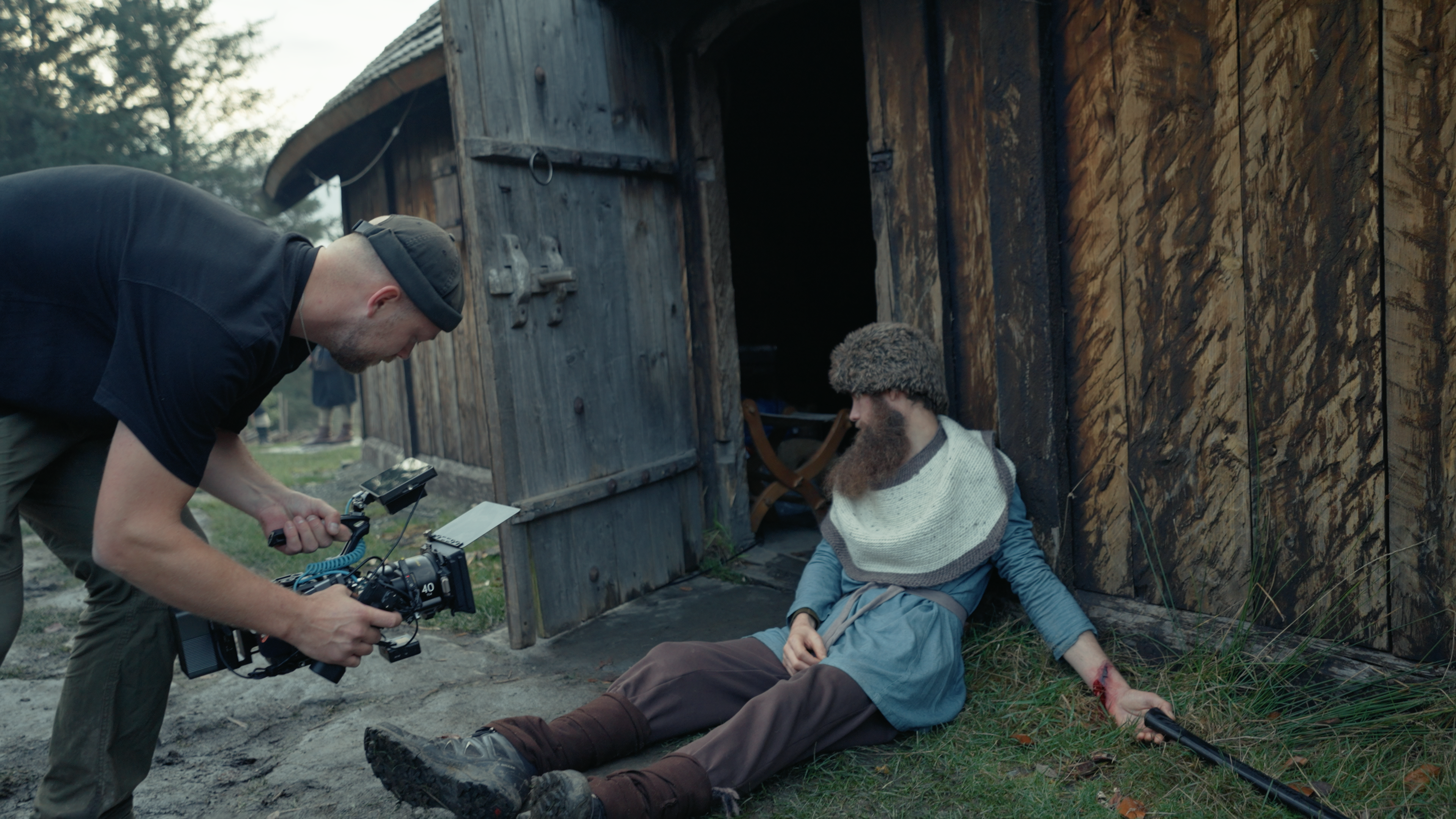
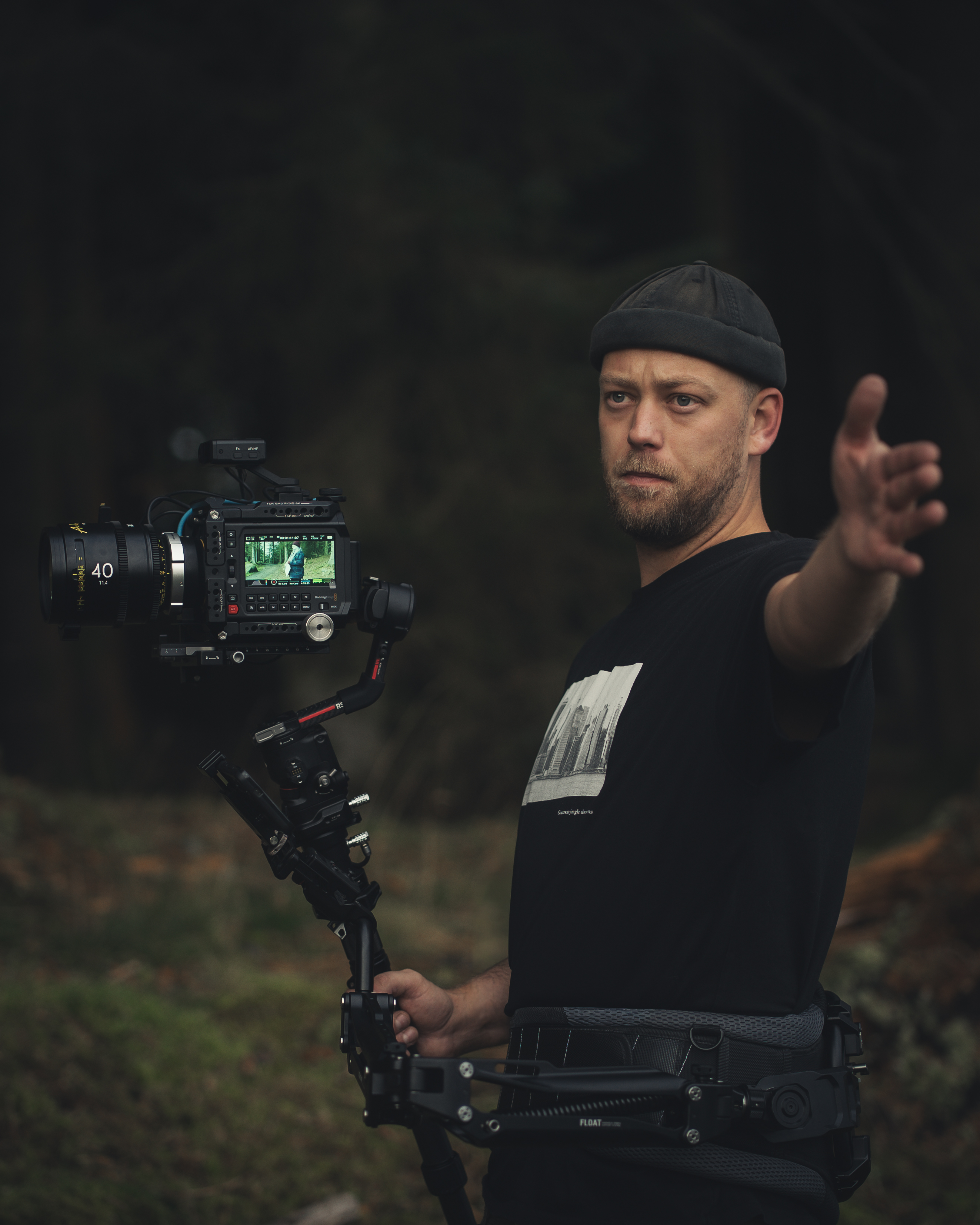
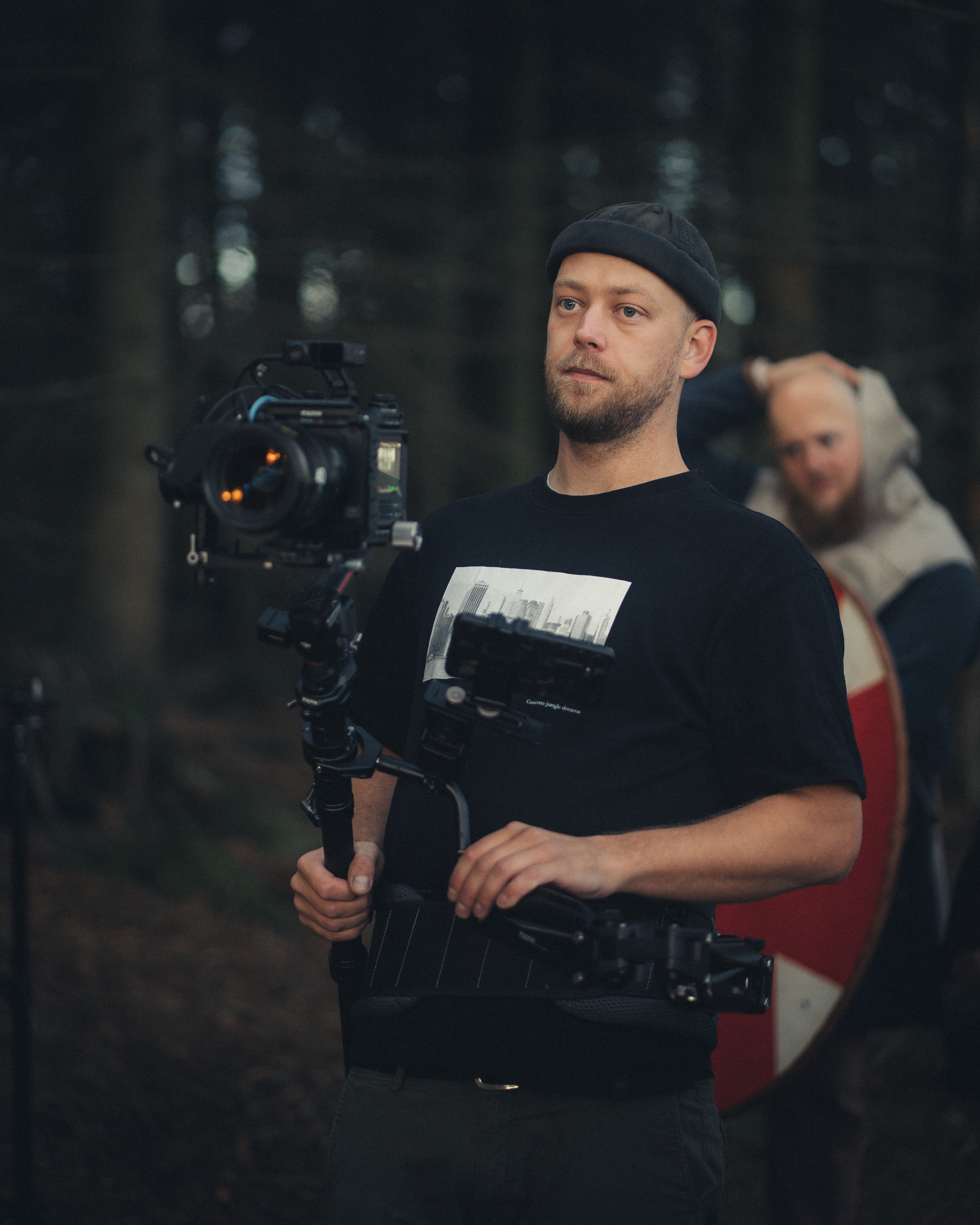
- I used the Blackmagic Design PYXIS 6K because of its great ability to be rigged for almost everything.
I knew that we were to have a lot of handheld scenes, gimbal scenes and eyelevel scenes,
So the PYXIS 6K was just a great choice in my opinion.
The color science behind the Blackmagic sensors and the RAW capability was also a huge plus for me, as I’m also the Editor/Colorist behind the project.
I paired the PYXIS 6K with DZO Arles Primes, because of fell in love with the characteristics that the Arles Primes delivers.
One of the biggest plusses about the Arles Primes for this project, was the ability to shoot T1.4.
During the Viking age, people didn’t have much lighting inside houses etc. – So the only main source of light was most likely from a fireplace or small candles.
Because I like to shoot in natural lighting conditions, I knew that I was going to use as much help from the lenses as possible.
So here the T-Stop of T1.4 really made all the difference!
“In what ways do you believe the choice of arles primes lenses enhances the storytelling in your films, particularly in terms of visual language and audience engagement?”
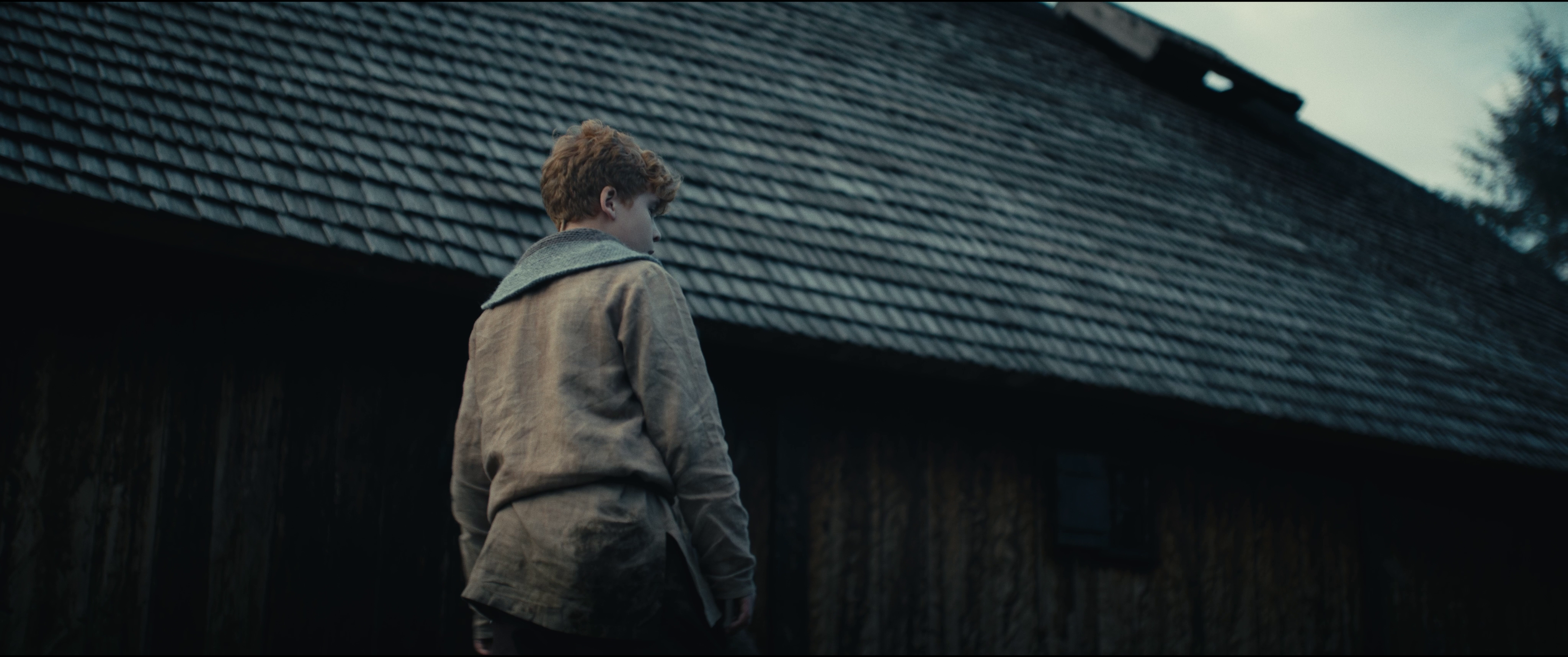
- The character of the Arles Primes, just gives that vintage yet powerful image,
I really needed the images not to be perfect, but still capturing the small details.
The Arles Primes somehow gives me that “old” feeling straight out of the box, instead of having to match that in post later.
The Viking age was chaotic and dirty in a sense, and the image of the film had to represent that feeling visually.
What this said, the Arles Primes Doesn’t produce a dirty image, put they somehow produce a very pleasing image that’s not perfectly sharp and digital.
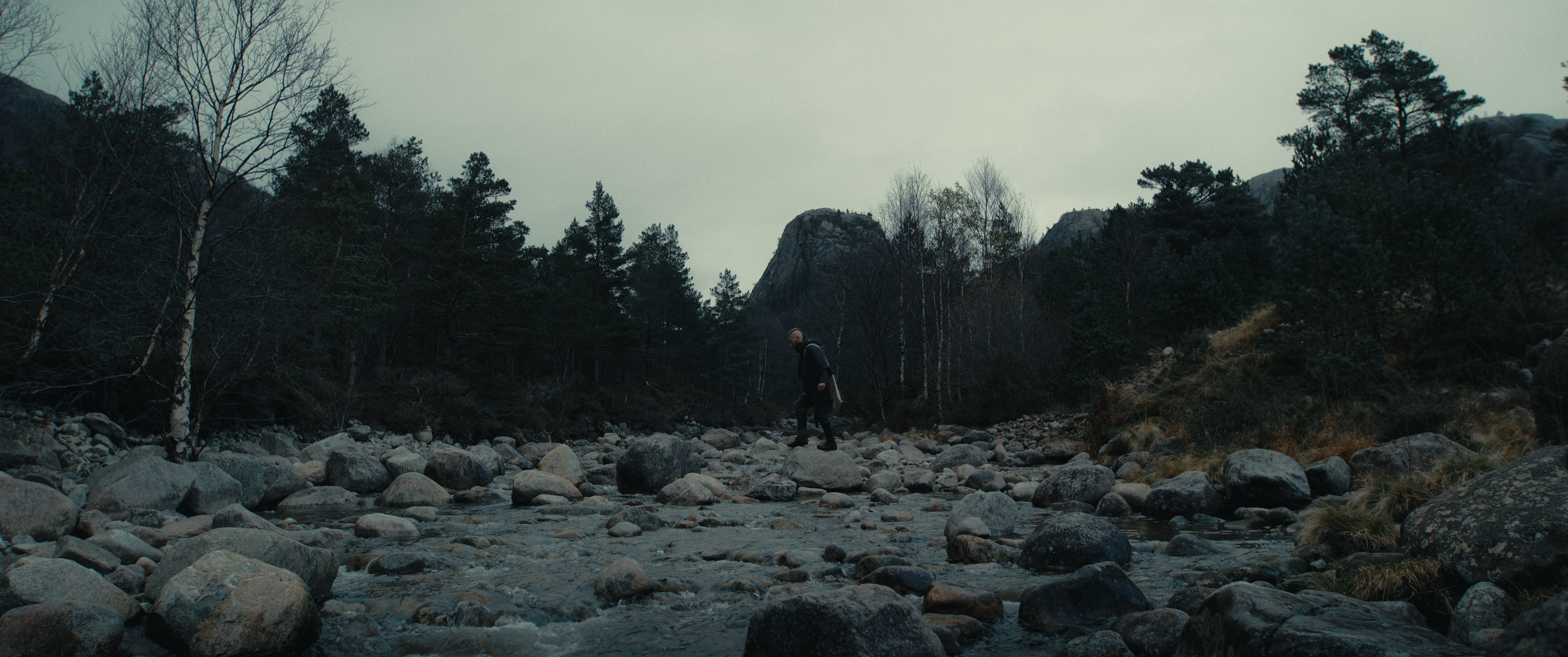
The Arles Primes comes in almost every focal length needed –I used the 21mm, 40mm, and 100mm for the production of this film.
The 21mm was used in 8 out 10 scenes, because I wanted that illusion of being personally present in the moment while watching the film.
The 21mm really creates that human like vision, plus I could use it for big wide shots and some close-ups as well.
“What challenges did you face when using arles primes lenses, and how did you creatively overcome these obstacles? What specific qualities of the lenses initially attracted you to them?”
- The only real “challenge” I had with the Arles Primes was the size and weight of them.
We had to do some gimbal/Steadicam shots, where the PYXIS would be rigged to a DJI RS3 Pro and Tilta Float system.
The lenses made the rig very front heavy – But I managed to balance it out with weight attachments to the rear of the rig. It did max out the capability of the DJI RS3 Pro, but on bigger productions they would properly have used bigger equipment for stabilized shots anyway.
As mentioned before, the main purpose of choosing the Arles Primes was solely because of the beautiful filmic image they produce and the fact that I was able to shoot wide open at T1.4 without any loss of image quality.
Truly a perfect match for the visuals I had in mind for this project!
“Through your experiences, what have you learned about the evolving landscape of cinematic products, and have there been any surprising insights that changed your approach to filmmaking?”
- I have learned that you don’t need perfect lenses for film, you want lenses that produce the image that you desire for your visuals.
I’m also surprised and excited to learn that you are actually able to get very very good quality/Performing equipment, for the fraction of the price of top tier manufactures such as Arri, Cooke, etc..
“What advice would you give to new filmmakers regarding the selection and use of camera equipment, particularly in how it can enhance their storytelling and artistic vision?”
- My honest advice would be:
“Don’t expect 100.000 USD equipment, making your film look worth 100.000 USD”
“Find the equipment that produces the visuals you need, this can be a 500 USD Lens and it can be a 50.000USD lens. You are the artist.”
I chose DZO Film because I found the Arles Primes perfect for my visuals of this project.
I also like the fact that DZO Film is making cinema quality lenses which is affordable and not with imaginary high prices.
They care about characteristics and filmmaking.
“Are there any emerging trends in cinematic lenses that excite you, and how do you envision these trends influencing the future of filmmaking?”
- Yes, I really like that ordinary small filmmakers are able to get their hands on great quality lenses now.
We’re able to purchase anamorphic lenses, and primes with a cinematic level of character and quality today – This wouldn’t be possible if we just go back 10 years.
So with the ongoing progress with companies making a market for small filmmakers, is definitely something that will spark future generations of big filmmakers!